Over the years, I've come to appreciate so much more about the rose than just the beauty of its flowers. In these days of late fall the rose hips add some nice color to the last few roses that are still in bloom. One of the best hip producers I have is Gertrude Jekyll whose rose hips you see pictured here.
Last year I gathered many rose hips and tried planting their seeds. Unfortunately I was not able to get any to grow. This year I decided to give it another try and I have been collecting seeds again. One night as I was cutting the hips open to collect the seeds, I tasted the sweetness of the hips on my fingers and knife. Having known people who used to collect hips to make rose hip tea, Angie and I decided to give it a try.
A quick search of the Internet and we found a simple recipe to try. Chop up 2 teaspoons of rose hips for each cup of tea you want, bring as many cups of water to a boil, pour the water over the hips and let steep for 15 minutes. Finally pour the tea through a strainer and serve. We also added a small amount of sugar during the steeping process. Rose hips are said to have far more Vitamin C than Oranges or other citrus and are full of anti-oxidants.
Not knowing how fine to chop the hips we cut them to a medium size. Not minced or too fine but enough that it still brought out the flavor. I think it was about right but we were pretty much going blind. This size was easily strained.
The color of the tea was light and a bit cloudy. Angie's father was visiting and the three of us approached this new experience with varying degrees of comfort. I was most eager, Angie has been pulled into trying so many new things with me that by now she was ready, and Clyde was just going along. So you want to know what it tastes like, right? Well, you should give it a try. My father in law thought it tasted like apples. I thought there was also a flavor like pumpkin. Angie was surprised that it was more flavorful than she expected. Everyone finished their tea and in another half hour we were all ready to go to bed. It was just late I don't think the tea had anything to do with that.
If you decided to make some rose hip tea, only use hips from roses that have not had chemicals applied to them. You just don't know what the chemicals will do to you. One last thing, to any of my readers who have wondered where I have been, thanks for coming back. The summer was so hot this year that I didn't have a lot of great pictures to offer and not enough energy to work hard figuring out something to write about.
Friday, November 2, 2012
Rose Hip Tea
Wednesday, August 29, 2012
For Something Different
It has been so hot this summer that I haven't had many roses in bloom recently. With that being the case I thought I might share something totally different about myself. Below is a commercial I was in. It was filmed at the church I was serving at the time. It starts with a test screen. If you hang on the video will start. Enjoy!
Tuesday, July 31, 2012
Distant Drums Brings Back Memories
For years I have grown a wide variety of modern roses. While this is true, I have never grown any of Dr. Griffith Buck's roses. Knowing that ProfessorRoush has had good success with them and feeling like I would like to try something new, this spring I added four roses bred by Dr. Griffith Buck. As a professor at Iowa State, Dr. Buck developed shrub roses with the aim of increasing disease resistance and winter hardiness through the research foundation of the university. Of the four Buck roses I added this year, Distant Drums is a rose that has been on my interest list for many years.
Distant Drums is an often discussed roses because of the unique color of its roses. Maybe I should have said colors because I have seen it referred to as mauve, tan, pink, orange, and yellowish. Maybe "A Symphony of Color," is the best description I have seen. I was hoping for more of the mauve coloring but with the summer sun, I have yet to see it. Instead, the colors have been a rich mixture of pink and buff on flowers of twenty petals. I think that the shorter days of fall should give me a few flowers with mauve in them.
While not as tall as the other Buck Roses, Distant Drums is still growing nicely. It is roughly two feet tall and is very free flowering. With the English Rose, The Yeoman as a parent, Distant Drums inherits the unique fragrance of myrrh. Its flowers are holding up better to the 100+ degree heat than I had expected. For some reason, I worried about how it would do in the heat, but so far it is just fine. Below you get an idea of how its softer color can turn out. So far I am very happy with Distant Drums and I cannot speak its name without the fond memories of hearing the drums of the Pow Wows late into the evenings when we used to live in Pawnee. Even now I find myself smiling as I remember tucking Anna and Thomas into bed as the drums carried through the summer air and lulled us all to sleep.
Distant Drums is an often discussed roses because of the unique color of its roses. Maybe I should have said colors because I have seen it referred to as mauve, tan, pink, orange, and yellowish. Maybe "A Symphony of Color," is the best description I have seen. I was hoping for more of the mauve coloring but with the summer sun, I have yet to see it. Instead, the colors have been a rich mixture of pink and buff on flowers of twenty petals. I think that the shorter days of fall should give me a few flowers with mauve in them.
While not as tall as the other Buck Roses, Distant Drums is still growing nicely. It is roughly two feet tall and is very free flowering. With the English Rose, The Yeoman as a parent, Distant Drums inherits the unique fragrance of myrrh. Its flowers are holding up better to the 100+ degree heat than I had expected. For some reason, I worried about how it would do in the heat, but so far it is just fine. Below you get an idea of how its softer color can turn out. So far I am very happy with Distant Drums and I cannot speak its name without the fond memories of hearing the drums of the Pow Wows late into the evenings when we used to live in Pawnee. Even now I find myself smiling as I remember tucking Anna and Thomas into bed as the drums carried through the summer air and lulled us all to sleep.
Tuesday, July 24, 2012
Red Moss Rambler: The Giant in the Neighborhood
Occasionally, when ordering roses, you will be sent something you didn't order. Sometimes a rose is mislabeled but that is not what happened to me. This spring when my order from Rogue Valley Roses arrived it had an extra rose in the package. I was surprised to find a very small plant labeled Red Moss Rambler. I had ordered another red moss rose, Mel Hulse, and I guess in the process of ordering it they heard me ordering both. Rogue Valley Roses were very understanding and refunded the cost of the rose and after discussing how I would ship it back to them, Janet Inada asked me if, "I might not keep and grow it instead?" I hadn't planned on it but I said, "Sure, its a rose. I'll grow it." Red Moss Rambler is now the one and only non repeat blooming rose I grow. As you can see from the photo below Red Moss Rambler is certainly liking its new home.
The plant you see above arrived here just four months ago (the beginning of April) as the small rooted band you see below. It is hard to believe that such a quick transformation is possible but here it is. Without having to put energy in to growing flowers Red Moss Rambler has put its energy into sending out new canes of up to eight feet in length. I have seen this rose listed as growing twenty feet tall. It does not have a wall or tree that tall so I will be interested in seeing how it spreads out in coming years.
Its home is in a new bed filled primarily with English and Buck Roses. It may end up being a little out of place but what place do you give such a rose? It should have plenty of space to spread out and it is clear that Red Moss Rambler is going to out growing its neighbors by a long shot.
Red Moss Rambler is another of Ralph Moore's creative roses which he released in 1990. It also shares the same seed parent as his ground cover rose Red Cascade. It shares the same small red flowers but with a light mossing on the outside of the bud and an obviously more upright and vigorous growth habit. Before it began this amazing growth, I was treated to a half dozen blooms. While we are far from the end of our growing season, I can hardly wait to see it blooming next year.
In our backyard I put tomato cages around all new roses to protect them from accidentally getting knocked down or broken by our dogs. Yet as I looked at how Red Moss Rambler is growing and was being held a bit uptight by the cage, I decided that today was the day to take it off and let it spread out more naturally. It looks a lot more comfortable now. I can only imagine what it will look like after four years instead of four months.
The plant you see above arrived here just four months ago (the beginning of April) as the small rooted band you see below. It is hard to believe that such a quick transformation is possible but here it is. Without having to put energy in to growing flowers Red Moss Rambler has put its energy into sending out new canes of up to eight feet in length. I have seen this rose listed as growing twenty feet tall. It does not have a wall or tree that tall so I will be interested in seeing how it spreads out in coming years.
Its home is in a new bed filled primarily with English and Buck Roses. It may end up being a little out of place but what place do you give such a rose? It should have plenty of space to spread out and it is clear that Red Moss Rambler is going to out growing its neighbors by a long shot.
Red Moss Rambler is another of Ralph Moore's creative roses which he released in 1990. It also shares the same seed parent as his ground cover rose Red Cascade. It shares the same small red flowers but with a light mossing on the outside of the bud and an obviously more upright and vigorous growth habit. Before it began this amazing growth, I was treated to a half dozen blooms. While we are far from the end of our growing season, I can hardly wait to see it blooming next year.
In our backyard I put tomato cages around all new roses to protect them from accidentally getting knocked down or broken by our dogs. Yet as I looked at how Red Moss Rambler is growing and was being held a bit uptight by the cage, I decided that today was the day to take it off and let it spread out more naturally. It looks a lot more comfortable now. I can only imagine what it will look like after four years instead of four months.
Friday, July 20, 2012
Red Cascade: A Rose of Another Shape
There were several roses I took cuttings from last Fall and put them in my cutting bed. Having a growing success at getting cuttings to start, I took four small cuttings from Red Cascade hoping to get one or two to start new plants. Red Cascade has helped me to increase my batting average because all four cuttings took. On Mother's Day I took the two strongest ones to my mother's house and planted them in a planter around her gas light in front of her house. Later I potted up the next one while the smallest of them I moved to this slightly raised bed in our back yard.
Red Cascade is a miniature rose bred by Ralph Moore but miniature only applies to the size of its petals and leaves. The bush actually grows to be quite big, or should I say quite wide. It is described as growing a foot tall and ten feet wide - the rose equivalent of an inch deep and a mile wide. This spreading nature makes it very useful as a ground cover, something most people would never think of in a rose. As such it stands out as another remarkable example of Ralph Moore's creativity. It was through the use of Rosa Wichurana on both sides of the family tree that this trait was brought to bear in Red Cascade. As its name indicates, Red Cascade is also another great rose to use in a raised bed where its growth can be allowed to spill over and down the side of the bed. While mine is still only a few months old, it has already reached the edge on one side of its new home.
The small flowers are also nice, being somewhat old fashion in shape and opening flat. I have been impressed with its vigor, both in growing new roots and its ability to spread quickly. I suspect that both are related, and I wonder if in a couple of years I will wish that I had given it more space than I did. We will worry about that later. As for now I am just enjoying its spreading habit.
Red Cascade is a miniature rose bred by Ralph Moore but miniature only applies to the size of its petals and leaves. The bush actually grows to be quite big, or should I say quite wide. It is described as growing a foot tall and ten feet wide - the rose equivalent of an inch deep and a mile wide. This spreading nature makes it very useful as a ground cover, something most people would never think of in a rose. As such it stands out as another remarkable example of Ralph Moore's creativity. It was through the use of Rosa Wichurana on both sides of the family tree that this trait was brought to bear in Red Cascade. As its name indicates, Red Cascade is also another great rose to use in a raised bed where its growth can be allowed to spill over and down the side of the bed. While mine is still only a few months old, it has already reached the edge on one side of its new home.
The small flowers are also nice, being somewhat old fashion in shape and opening flat. I have been impressed with its vigor, both in growing new roots and its ability to spread quickly. I suspect that both are related, and I wonder if in a couple of years I will wish that I had given it more space than I did. We will worry about that later. As for now I am just enjoying its spreading habit.
Saturday, June 30, 2012
Prague Rose Garden Club Update
Despite the intense heat of the past week, the roses in the Prague Rose Garden have been growing quite nicely. The seated arch has been the focal point of the garden but there were no roses growing up the arch. Last spring I planted a Lavender Lassie on each side and I think by summer's end they will grow to meet at the top of the arch. They are flanked on either side by some form of Knock Out.
I would like to mention that the Prague Rose Garden wouldn't be here if it weren't for two very special people - Milo & Norma Foreman. Norma was the first president of the Prague Rose Garden Club. She tells me that it was really Milo who put the garden in and took care of the roses. Milo is now in his 90's and I get the priviledge of spending Sunday mornings with them, as Norma is the pianist at the Prague United Methodist Church which I also have the joy of serving. One last thing, Milo did a fabulous job making sure that the garden had a very rich and friable soil. The ground is incredibly easy to work.
The bed below is where I started my work in the Prague Rose Garden. This bed sat idle with grass over two feet tall. I thought, "With no roses and the city crew unable to get their John Deer equipment into it, surely no one will be offended if I clean it out and put a few roses in." Being closest to the road the three tall minis in back and the row of The Fairy in front add some nice color to passers by. Eventually the two English Roses I planted last fall in the center (Heritage and St. Swithun) will add some heighth and fill out the display. Hopefully it might even attract a few people to stop and, well, smell the roses.
Last year I turned some attention to the other end of the garden where a lone purple hybrid tea that is very winter tender was making a home. I had less of a plan on this one and lots of cuttings and suckers that had taken, so I began to fill it in. Up front you have two plants of Popcorn on either side of the water hydrant. On each of the corners are yellow roses: in the back are two of the English Rose Graham Thomas and in front are the miniflora Autumn Splendor and an unknown yellow florabunda. I took the cutting sometime ago but didn't write down what it was from and forgot. I'll figure it out in time to label it when I get around to putting markers of each of them. When I do this, I was thinking that I would put the variety, class and year. What do you think? Does it need more information or does more mean people read less? Flanking the hybrid tea are Reine des Violettes and Precious Dream and behind is DayDream.
I took a step back so you can get a sense of the size of the garden. It's not so large as to make the upkeep too difficult yet large enough to make a statement. I think its elongated design, running diagonally across the corner of the park, works nicely for the maximum display.Monday, May 14, 2012
Why Can't I Grow Roses?
Every week someone will tell me, "I just can't grow roses", or they will ask me, "Why can't I grow roses, Rev?" Almost always the answer comes down to one or more of the following issues. When you follow these simple rules, growing roses is easy.
Select the Right Roses
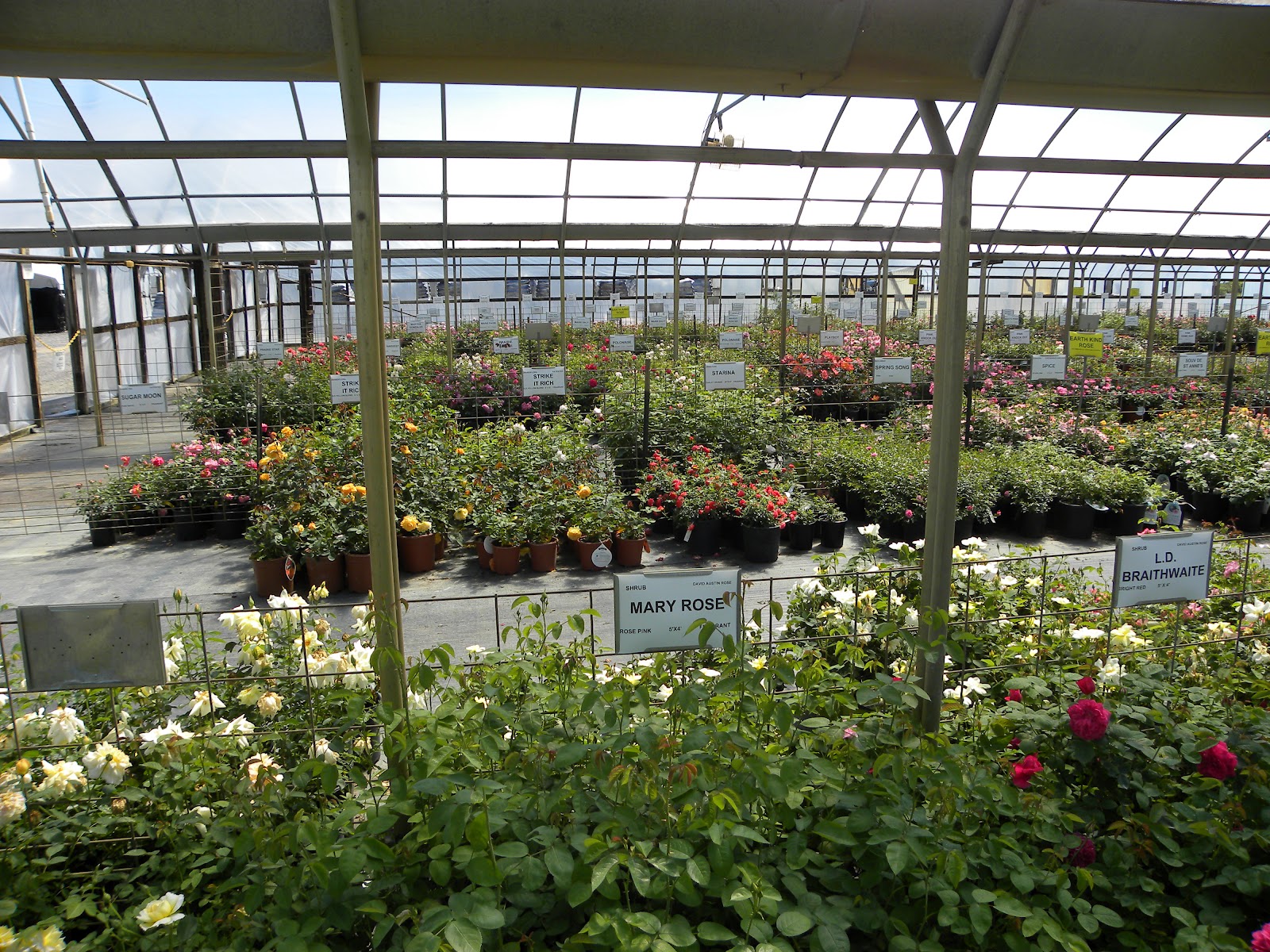
For years people have been trying to grow the long stem hybrid tea roses they get at the florist, but these are the very worst type of rose for the casual gardener to grow. The hybrid tea became so popular that some people can hardly recognize an old fashion type of rose as a rose. In response to the trouble they have had with hybrid teas, they have either given up on growing roses, or they have chosen the ever popular Knock Out series of roses. Knock Outs are almost bullet proof in terms of disease and toughness, but they leave much to be desired in my mind. First, they are not pretty and, second they have no fragrance. There are just so many better options than, "All or Knock Out." Knock Out did make the list Texas A&M has produced of disease and drought resistant roses which they call Earth-Kind Roses. I think this list is a great place to start when looking to be successful growing roses. I have also designated some roses I grow as Rev Recommends. These are roses that I have found to be pretty easy to grow and have something special to offer to your garden. You will find these roses at the nurseries that I have listed below and to the right under Favorite Rose Resources.
Grow on the Right Roots
For roses that will be long lived and winter hardy you need to grow roses grown on their own roots. This (and the rule above) will rule out almost every rose you can buy at your local nursery. For ease of production the large rose growers in this country graft all their roses on to the rootstock of another variety. When planted, the rose on top blooms while the rose on bottom grows the roots for the rose on top. Then, when a cold winter kills the rose above ground, only the root stock is left, and it produces an undesirable flower. Roses grown on their own roots are roses that have been taken from a cutting and allowed to grow its own roots. These plants come smaller than their Frankenstein grafted cousins, but in a few years they will surpass the others in production. Also, when you order from the companies I have listed you can call them if you are concerned about ordering online and they will usually get you your roses in one or two weeks. That really isn't very long when you should really be out in the garden getting ready for your new rose.
Grow in a Rich Soil
One of the best pieces of advice I have followed when growing roses came from an old adage, "I would rather plant a two dollar bush in a ten dollar hole, than than a ten dollar bush in a two dollar hole." Add to that another adage, "If you feed the soil the soil will feed you." This means when you plant your roses, dig your hole until you think it is far too big and add in compost and other soil amendments to create a rich growing environment. I often add a cup alfalfa pellets and a cup of dry dog food along with the compost from my compost pile. Saturday we had a work day at the church and I was helping my wife, Angie, plants several rose at the church. Once I had dug the first hole someone said, "I thought we were having a work day, not a funeral." To me, that was the perfect compliment that I had dug a big enough hole.
Selecting the Right Amount of Sun
Roses need sunlight to thrive. Most roses need at least six hours of full sun and most will be better with more. Consider this when selecting the location for your roses. If you are in an area that regularly gets to 100 degrees, also think about if this is morning light or afternoon light. In places like Oklahoma (where I live) it is often advantageous to allow for late afternoon shade from the most intense heat of the summer sun.
An Inch of Water Each Week
To successfully grow roses you need to make sure they have an inch of water each week. This is particularly true of the growing season but roses, like all plants, need steady water even during the winter. Rain is always better than a hose or sprinkler, but if nature does not help out you need to. A true lady in one of my early churches told me, "A rose is like a lady, she likes a stiff drink, but doesn't like to get her feet wet." Keep the soil moist but not soggy.
Select the Right Roses
For years people have been trying to grow the long stem hybrid tea roses they get at the florist, but these are the very worst type of rose for the casual gardener to grow. The hybrid tea became so popular that some people can hardly recognize an old fashion type of rose as a rose. In response to the trouble they have had with hybrid teas, they have either given up on growing roses, or they have chosen the ever popular Knock Out series of roses. Knock Outs are almost bullet proof in terms of disease and toughness, but they leave much to be desired in my mind. First, they are not pretty and, second they have no fragrance. There are just so many better options than, "All or Knock Out." Knock Out did make the list Texas A&M has produced of disease and drought resistant roses which they call Earth-Kind Roses. I think this list is a great place to start when looking to be successful growing roses. I have also designated some roses I grow as Rev Recommends. These are roses that I have found to be pretty easy to grow and have something special to offer to your garden. You will find these roses at the nurseries that I have listed below and to the right under Favorite Rose Resources.
Grow on the Right Roots
For roses that will be long lived and winter hardy you need to grow roses grown on their own roots. This (and the rule above) will rule out almost every rose you can buy at your local nursery. For ease of production the large rose growers in this country graft all their roses on to the rootstock of another variety. When planted, the rose on top blooms while the rose on bottom grows the roots for the rose on top. Then, when a cold winter kills the rose above ground, only the root stock is left, and it produces an undesirable flower. Roses grown on their own roots are roses that have been taken from a cutting and allowed to grow its own roots. These plants come smaller than their Frankenstein grafted cousins, but in a few years they will surpass the others in production. Also, when you order from the companies I have listed you can call them if you are concerned about ordering online and they will usually get you your roses in one or two weeks. That really isn't very long when you should really be out in the garden getting ready for your new rose.
Grow in a Rich Soil
One of the best pieces of advice I have followed when growing roses came from an old adage, "I would rather plant a two dollar bush in a ten dollar hole, than than a ten dollar bush in a two dollar hole." Add to that another adage, "If you feed the soil the soil will feed you." This means when you plant your roses, dig your hole until you think it is far too big and add in compost and other soil amendments to create a rich growing environment. I often add a cup alfalfa pellets and a cup of dry dog food along with the compost from my compost pile. Saturday we had a work day at the church and I was helping my wife, Angie, plants several rose at the church. Once I had dug the first hole someone said, "I thought we were having a work day, not a funeral." To me, that was the perfect compliment that I had dug a big enough hole.
Selecting the Right Amount of Sun
Roses need sunlight to thrive. Most roses need at least six hours of full sun and most will be better with more. Consider this when selecting the location for your roses. If you are in an area that regularly gets to 100 degrees, also think about if this is morning light or afternoon light. In places like Oklahoma (where I live) it is often advantageous to allow for late afternoon shade from the most intense heat of the summer sun.
An Inch of Water Each Week
To successfully grow roses you need to make sure they have an inch of water each week. This is particularly true of the growing season but roses, like all plants, need steady water even during the winter. Rain is always better than a hose or sprinkler, but if nature does not help out you need to. A true lady in one of my early churches told me, "A rose is like a lady, she likes a stiff drink, but doesn't like to get her feet wet." Keep the soil moist but not soggy.
Most of this list involves early work before you put your roses in the garden. If you do the early prep work, you to can grow beautiful roses. If you take short cuts, don't be surprised if you continue to find it difficult to grow roses.
Subscribe to:
Posts (Atom)