Monday, May 14, 2012

Why Can't I Grow Roses?

       Every week someone will tell me, "I just can't grow roses", or they will ask me, "Why can't I grow roses, Rev?"  Almost always the answer comes down to one or more of the following issues.  When you follow these simple rules, growing roses is easy.
Select the Right Roses
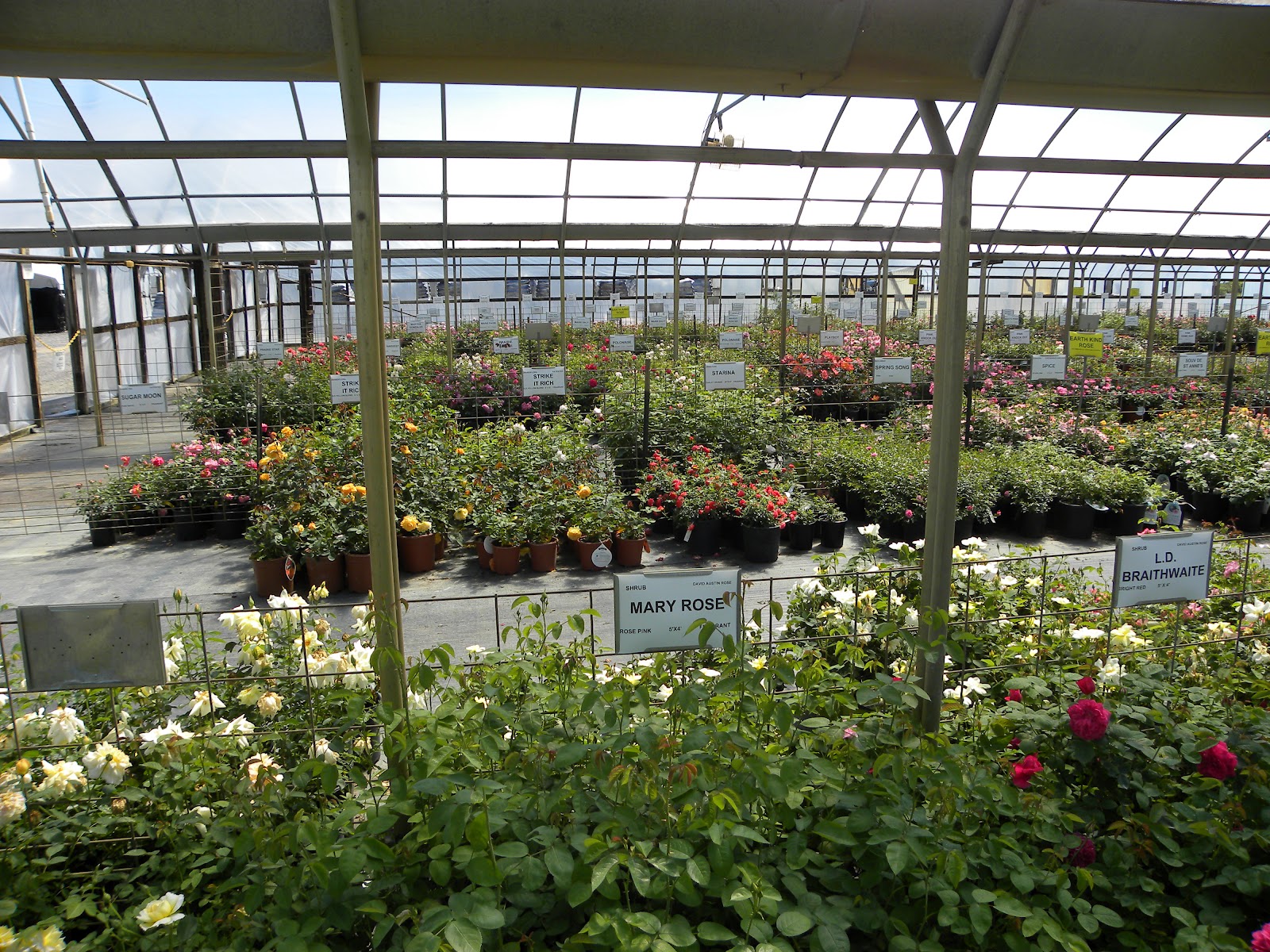
       For years people have been trying to grow the long stem hybrid tea roses they get at the florist, but these are the very worst type of rose for the casual gardener to grow.  The hybrid tea became so popular that some people can hardly recognize an old fashion type of rose as a rose.  In response to the trouble they have had with hybrid teas, they have either given up on growing roses, or they have chosen the ever popular Knock Out series of roses.  Knock Outs are almost bullet proof in terms of disease and toughness, but they leave much to be desired in my mind.  First, they are not pretty and, second they have no fragrance.  There are just so many better options than, "All or Knock Out."  Knock Out did make the list Texas A&M has produced of disease and drought resistant roses which they call Earth-Kind Roses.  I think this list is a great place to start when looking to be successful growing roses.  I have also designated some roses I grow as Rev Recommends.  These are roses that I have found to be pretty easy to grow and have something special to offer to your garden.  You will find these roses at the nurseries that I have listed below and to the right under Favorite Rose Resources
Grow on the Right Roots
       For roses that will be long lived and winter hardy you need to grow roses grown on their own roots.  This (and the rule above) will rule out almost every rose you can buy at your local nursery.  For ease of production the large rose growers in this country graft all their roses on to the rootstock of another variety.  When planted, the rose on top blooms while the rose on bottom grows the roots for the rose on top.  Then, when a cold winter kills the rose above ground, only the root stock is left, and it produces an undesirable flower.  Roses grown on their own roots are roses that have been taken from a cutting and allowed to grow its own roots.  These plants come smaller than their Frankenstein grafted cousins, but in a few years they will surpass the others in production.  Also, when you order from the companies I have listed you can call them if you are concerned about ordering online and they will usually get you your roses in one or two weeks.  That really isn't very long when you should really be out in the garden getting ready for your new rose.
Grow in a Rich Soil
       One of the best pieces of advice I have followed when growing roses came from an old adage, "I would rather plant a two dollar bush in a ten dollar hole, than than a ten dollar bush in a two dollar hole."  Add to that another adage, "If you feed the soil the soil will feed you."  This means when you plant your roses, dig your hole until you think it is far too big and add in compost and other soil amendments to create a rich growing environment.  I often add a cup alfalfa pellets and a cup of dry dog food along with the compost from my compost pile.  Saturday we had a work day at the church and I was helping my wife, Angie, plants several rose at the church.  Once I had dug the first hole someone said, "I thought we were having a work day, not a funeral."  To me, that was the perfect compliment that I had dug a big enough hole.
Selecting the Right Amount of Sun
       Roses need sunlight to thrive.  Most roses need at least six hours of full sun and most will be better with more.  Consider this when selecting the location for your roses.  If you are in an area that regularly gets to 100 degrees, also think about if this is morning light or afternoon light.  In places like Oklahoma (where I live) it is often advantageous to allow for late afternoon shade from the most intense heat of the summer sun. 
An Inch of Water Each Week
       To successfully grow roses you need to make sure they have an inch of water each week.  This is particularly true of the growing season but roses, like all plants, need steady water even during the winter.  Rain is always better than a hose or sprinkler, but if nature does not help out you need to.  A true lady in one of my early churches told me, "A rose is like a lady, she likes a stiff drink, but doesn't like to get her feet wet."  Keep the soil moist but not soggy. 
       Most of this list involves early work before you put your roses in the garden.  If you do the early prep work, you to can grow beautiful roses.  If you take short cuts, don't be surprised if you continue to find it difficult to grow roses.

Monday, April 30, 2012

The Fence Line

This is the last post on our tour of the roses and they follow the fence line along the north end of the property.  The planting is not at all creative but together these roses make a very nice display and add some privacy to the backyard.  The fence makes a good support for the climbers and lax growers in the bunch.  I am beginning with my unabashed advocacy for Twister.  I think Twister is overlooked and under grown. As it begins its third year Twister has grown as tall as or taller than the four foot tall chain link fence.  This Ralph Moore creation is classified as a climbing miniature and it certainly fits this category, but it also grows well as a stand alone shrub where its growth spreads nicely.  Its flowers are also very full old fashion formed, very fragrant, and open flat to 2 1/2" wide.   Once they start blooming in the spring, there will not be a day until November that I cannot go out and take a couple of flowers for a vase.
Planted on either side of Twister are two larger striped roses, Scentimental and Moore's Striped Rugosa.  I really like to plant Twister in groupings of three as seen here.  This is the second time I've done this the first was in 1999 when it was first introduced. 
This row of roses is held down in the middle by the older roses and has expanded each direction with new additions each year.  From the top is the newest and just off camera is William Shakespeare 2000, Carlin's Rhythm, Abraham Darby, Climbing Rainbow's End, Ballerina, Linda Campbell, St. Swithun, Scentimental, Twister, Moore's Striped Rugosa, Heritage, Dublin Bay, Dragon's Blood, Belinda's Dream, and Flower Carpet Red.  This was not my most thought out arrangement but I like it.
This is the start of Cl. Rainbow's End's second season which began as a cutting from my mother's plant. 
Below we have two of Moore's rugosa hybrids flowing off the edge of the picture (Linda Campbell left and Moore's Striped Rugosa right).  Linda Campbell is quickly joining my list of favorite roses.  Two of my other favorites, St. Swithun and Twister, are also pictured here.
While still a tiny plant, Carlin's Rhythm is beginning its first full season by producing huge (4-5") single and very fragrant blossoms.  Kim Rupert says that the blooms never get this big in California where he created it, but it has never been smaller than 4" here in Oklahoma.  I may be looking forward to what this rose does this year more than any other rose.

Wednesday, April 25, 2012

Welcoming Roses

I think miniature roses serve as a warm welcome to any home.  I might think this because my mother had and still has a nice row of miniature roses that greet you as you come in the front door.  Most of her roses were planted in the early 70's and were always there in my memories.  Ours do well despite being on the west side of the house and exposed to the greatest heat of the summer sun, but hey, that's where the front door is.  The minis are Autumn Splendor, Tattooed Lady, Sorcerer, and Vi's Violet.  The bed also includes three English Roses: Heritage, Mary Rose, and St. Swithun.
The entry was so sad when we moved here.  We moved in June of 2009 and I put the bed in and had it planted by July 4th that summer.  It didn't look too much better on that day of celebration but it was full of potential.  I over planted it and have since moved two roses out, Gertrude Jekyll moved to the back and Seattle Scentsation moved to the park.  Both are much happier in their new locations. 
This year's new bed pulls together what had been a grouping of day lillies, peonies, and what my Dad called Naked Ladies with a couple of Easter Lillies left over at the church with four new roses.  The two roses on the back side of the fence are Pam's Choice on the left and Cinderella on the right.  Cinderella is a start from one of my mother's miniature roses at her house.  It was planted there when my brother was born in 1970. 
From the front side are Queen Bee and Penelope.  This bed gets several hours of afternoon shade, ideal for our hot summer afternoons.  In the back yard you can see in the left corner of the picture what I think is Blaze Improved, one of three roses that were here when we moved. 
Jack joins me in looking across the backyard to see Blaze Improved, Gertrude Jekyll, and a group of blackberries growing on the back fence line.  The retaining wall around the back porch was added last year to keep water out of the storm cellar and what started as small fire pit has led to a growing expansion of the back porch.
Some of the men in the church built this new shed for the parsonage and Gertrude Jekyll, Unconditional Love, and Snow White decorate this side while The Fairy (not seen) is on the other side.
Since these are not the most beautiful pictures, let me share one close up bloom of Pam's Choice.  I'm really looking forward to watching this rose mature.

Friday, April 20, 2012

Surrounded by Roses

Last week I took a few steps back to show you the development of our rose garden.  From that southeast corner of the house in the backyard we're going to work our way around to the front this week and then work our way around the rest of the house finishing full circle in a couple of weeks.  This section south of our house is an area about twenty four feet by forty feet and as you walk through you have roses all around you.  Here Graham Thomas is in full bloom, reaching up at the beginning of its third year.
Reine des Viollette resides of the other side of this area between Ebb Tide and Lavender Lassie.  You can see Ebb Tide's dark blossoms on the left.  Reine des Viollette is always good for a great spring showing with just a few flowers coming off and on through the summer.  I had decided several years ago that while there are many wonderful once blooming roses, I was going to focus on growing repeat flowering roses.  RDV fit least into this plan until this spring.  With my order from Rogue Valley Roses there was a rose sent that I had not ordered, Ralph Moore's Red Moss Rambler.  The good people at Rogue Valley Roses refunded the cost of the rose and asked if I would planted it if I kept it.  I said, "It's a rose - sure I will."  While not pictured and in a different area I needed to introduce him sometime.
Taken before the roses were blooming much and after a nice rain you see this area from the front yard.  On the right just in front of Jeri Jennings is my cuttings bed and on the left behind the Iris are Vineyard Song and Precious Dream.
You met our Italian Greyhound, Jack last week.  With him today is our Siberian Husky, Dusty.  She is twelve and beginning to slow down some.  In her younger days she might trample a rose or dig one up but these days she likes to lay underneath them if she can find a spot to get comfortable. 
Here is Vineyard Song and Precious Dream on the south side of the house moving to the front.  They are shaded from the worst heat of the day by the Oak tree to the west.  Remember none of these beds or plants were here when we moved in June of 2009. This section was all put in and planted in the spring of 2010.
I really like Vineyard Song's graceful shape and beautiful flowers.  Vineyard Song is classified as a Shrub but to me it fits in very nicely with the Polyantha Roses.  Its canes arch out from its center making a plant that is five or six feet wide and two to three feet tall. 
I passed over Abraham Darby which shares the fence with Graham Thomas, Pat Austin, Jeri Jennings and others but I took this really nice picture of Abe and just had to stick it in here.  After putting the Iris in last year they will need to be thinned out and spread around this year.
Just a week later this section in the backyard is really beginning to show its colors.

Friday, April 13, 2012

The Big Picture

I have grown roses for over twenty years but for most of those years, I have simply grown roses.  I would acquire one here and one there and plant them in the next available spot.  When we moved to Prague three years ago I decided I would grow a rose garden.  That may sound like a subtle difference but it is one that is noticeable when comparing my current garden to places I have lived before.  
All of these roses were planted in the past two years (either last spring or the spring before that) with the oldest just starting their third year.  That reminds me of a conversation I had with a Korean friend about how old we are.  We were born just days apart but he always said we were a year older than I counted.  The difference came from my thinking that you are a year old a year after you are born and he said you enter year one when you are born.  To him you are one when you are born and two once your first year is over.  This year will be the year that we begin to see the garden mature I think.  For the most part the roses are just about to start blooming.  Some of course, have been going at it for a little while.  In the picture below you will see the red-fuchsia blooms of Siren's Keep on the right and the very lavender color or Lavender Crystal just left of the gate.
The tall bush at the corner of the house is the Hybrid Musk Lavender Lassie.  This bush was significantly affected by Rose Rosette Disease/Virus at the beginning of last Spring.  I cut each of the effected canes all the way off at the very base of the plant.  I thought that I had managed to save the plant because I had no other symptoms on the bush last year.  However, this spring I had a new basal breaking cane that showed all the typical signs of infection.  It is hard to believe because the rest of the plant seems totally uneffected.  I'm going to let it go through its spring blossoming and then I expect to take it out.  I do have a year old replacement plant growing from a cutting of this bush.  I hate to take it out but I don't think it is possible to save it at this point.
The roses in this area of the garden cover the range from red (Braveheart) to purple (Rhapsody in Blue) to white and cream (Popcorn and Jude the Obscure).  Popcorn is in the foreground of the photo below I have also moved some purple Iris into this area that used to live in the back of our yard. 
Just beyond the fence are Treasure Trail, Abraham Darby, Pat Austin, Graham Thomas (the tall one in the middle), Golden Buddha, and Jeri Jennings.  Beyond Jeri Jennings is my cuttings bed.  The section of the garden obviously moves between the yellow and orange themes with some pink and salmon mixed in.  This area wouldn't even grow weeds before we moved here.  It was just bare ground.  It has come so far when we moved here. 
Siren's Keep is just starting its second year.  It is proving to be a prolific and early bloomer.  Its flowers have about 40 large petals loosely filling 4-5" blossoms.  The color is somewhere between red-fuchsia-pink and its blooms are a real eye catcher.  Behind Siren's Keep is DayDream. Planted at the same time one has grown more upward while the other is more spreading while Lavender Lassie overlooks them both.
I wanted to get a picture of Rhapsody in Blue with the purple Iris blooming just beside it.  I think the colors go pretty well together.  Just to the left is Jude the Obscure and it is still a long way from blooming.  It felt like Jude's color would provide a nice complementary color.  And just in front of both is Jack, our Italian Greyhound.  Jack just can't resist getting in on the action.  Unless it's cold or wet, he is my constant companion when working in the garden.   
The longer I work in the garden, the more I find myself taking a step back and seeing the big picture.  This takes you through a good section of half of my roses.  I will take you through the other sections in the next two posts.

Sunday, March 25, 2012

Visiting the American Rose Society and Chamblee's Rose Nursery

Over Spring Break, Angie and I visited her father in Shreveport, Louisiana.  Not as exotic as Anna's trip to Budapest and Prague (Czech Republic not Oklahoma) or as fun filled (I don't want to know the details) as Thomas' trip to Panama Beach but we did manage to stop by the American Rose Society Center Garden just outside of Shreveport and Chamblee's Rose Nursery in Tyler, Texas.  It was early in the season for all the trimmed hybrid tea, floribunda, grandaflora, and miniature roses but we did find many of the untrimmed garden roses in bloom.  This entry will be a bit photo heavy but most will stay on the computer hard drive waiting for some appropriate entry.
I have often seen pictures of Rosa Banksiae Lutea or Lady Banks Yellow in bloom but have never in person.  The sight of Lady Banks Yellow at the beginning of her show was enough to make the whole trip worth while.
Each tiny flower is less than an inch in size with 25 plus petals and is beautiful on its own.
The headquarters for the ARS is set deep in the grounds and is lovely surrounded by the tall pines.  I had planned to renew my membership while on the visit but the doors to the center were locked.  I guess I could have walked around to the parking lot side of the building but at that point I was more interested in exploring the gardens. 
My favorite section of the gardens was one that featured many tea, noisette, and hybrid musk roses.  I have always thought that I would really enjoy growing some of the noisette roses because of their large size, growth habit and flower form but I think Oklahoma winters would just be a little cold for them.


It looks like the ARS Center must host a lot of weddings in the gardens.  Angie thinks I should look for a retirement position where I could officiate the weddings and tend the gardens in exchange for living in a small house on the grounds.
Here is Evelyn blooming in the English Rose section.  The English Roses were almost all six to eight feet tall, a height I do not mind but larger than many people like.
The Event Center and reflecting pool has chairs set up for what looks to be a small wedding. 
Our next stop on our trip was Chamblee's Rose Nursery. You only get one picture because I quickly became engrossed in the examining roses.  I was blown away by the quality, size and value of their own-root roses.  Their one gallon plants are significantly less expensive than the much smaller bands I have been ordering.  I think I will be moving them up to my first look when I'm ordering roses.  Just to let you know I was remarkable restrained.  I bought three roses.  I bought Tradescant to replace the one I lost to Rose Rosette Disease (in case the cuttings I took don't make it), William Shakespeare 2000 because I can not resist a nice red rose, and Penelope.  Angie kept saying we can come back next time we come see her dad.  That's not a bad compromise as he is a really good guy.

Monday, March 12, 2012

Making the Move

Back in January I separated two suckers from their mother plants and recently dug them up to move to the park.  The first one is Precious Dream, a Hybrid Bracteata from Ralph Moore.  It has begun to develop some nice roots.
Now the young plant of Precious Dream is making its home in the Prague Rose Garden.  I think it enjoyed the ride in my new Honda Ridgeline pictured it the background.  After 10 years in my Nissan Xterra it was time to pass it along to my son, Thomas. 
The second rose is Reine des Violettes, a Hybrid Perpetual from 1860.  Reine des Violettes is a purple rose that has a strong spring bloom and scattered blossoms in the fall. 
Both are now snuggled in to their new home in the Prague Rose Garden.  The Rose Garden has three beds.  I started working with the South bed and it is now filled with a row of The Fairy, two English Roses in the center row (St. Swithun and Abraham Darby), and a third row with Twister, Autumn Splendor, and Seattle Scentsation.  Now I am filling in the North bed and these two join an originally planted lavender Hybrid Tea, two plants of Popcorn, two Graham Thomas, and one DayDream.  I still have the front row to complete with several more minis to flank the two plants of Popcorn.