Saturday, February 14, 2015

Megan's Gift Multiplies

Just before Christmas, Megan came into my office with a cheerful glow on her face and a red and white striped miniature rose in her hand.  Megan said, "Merry Christmas!" as she offered me this rose she had picked up at the store knowing that I loved roses.  It was such a sweet gesture from the housekeeper of the church to me as the pastor.  I put it in the widow of my office and enjoyed every bloom it gave, but by the end of January it had stopped blooming so I brought it home to get it ready for its next phase of life.
What most people don't know is that the pretty miniature rose you buy at the store is usually three or four plants of the same rose growing in one pot.  The nursery packs them in tight to give the biggest display in the quickest time possible.  They often call them "Party Roses" knowing that they will make a nice show for a week or two and then the rose usually dies from neglect.   If you look close you can see that the branches do not originate from a common source but there are four plants crammed into a very small pot. 
The roots have grown so that they are tangled together, but if you gently work them apart you can separate the plants until you have (in this case) four separate plants ready to be potted up and given a life of their own.  There will often be some of the roots that break off, but if you are careful you can save most of them and reduce the amount of shock the roses experience.
Now they are ready to pot up, let their roots grow out and get ready to plant in the rose bed in a month or so.  Individually each rose will become a strong plant.  I bought this handy set of plantable pots for the next phase of their lives.  I will transplant each of these in about a month so these pots should be perfect. 
While I was at it I did some work with my roses from Chamblee's.  Did you know that when nurseries propagate plants they take several cuttings and put them in the same pot.  They do this so that if one or two of the new starts do not begin to root they will in all likelihood have at least one that makes it.  My own experience with propagating roses from cuttings is that almost half of them will die with over half making new plants.  Some varieties are so vigorous you can hardly miss, while others can be very difficult to get started.  This means that it is very common that you will have multiple plants in each pot. 
In my order of Purple Rain there were actually four plants.  In Shreveport there were three plants, Glamis Castle had three, Dolly Parton had two, Sachet had two, and Rise N Shine had two.  Only Green Ice and Twilight Zone were single plants.   Once I went through all the new pots, we went from what looked like 10 roses to 23 separated and potted up.  What a fun way to multiply your roses.  Now I have more roses I can plant, and I can share many of them as well.


Wednesday, February 11, 2015

Just Can't Pass Chamblee's When You Are In East Texas

Angie and I made a bittersweet trip to Shreveport recently.  Her father's house is about to be sold and we needed to finish removing many of the personal items.  It was good to see Angie's brother and family but hard to work though another layer of grief after Clyde's death.  With a truck full of personal items we started our way back to Oklahoma knowing we would pass through Tyler, Texas.  I don't think it is possible for me to drive through Tyler without stopping at Chamblee's Rose Nursery, but with so little room I thought about not stopping.  As you would imagine my green thumb turned the steering wheel, and I found myself pulling into the familiar parking lot.
We are still in early February, so even greenhouse roses in Texas are just now coming out of dormancy.  A good thing as it will be another month before I will want to plant roses with new growth here in Oklahoma.  Even so, it was nice to see a few rose blooms as we walked our way through the two greenhouses they have open to the public.  The many other greenhouses have roses growing in various stages of getting ready for the market. 

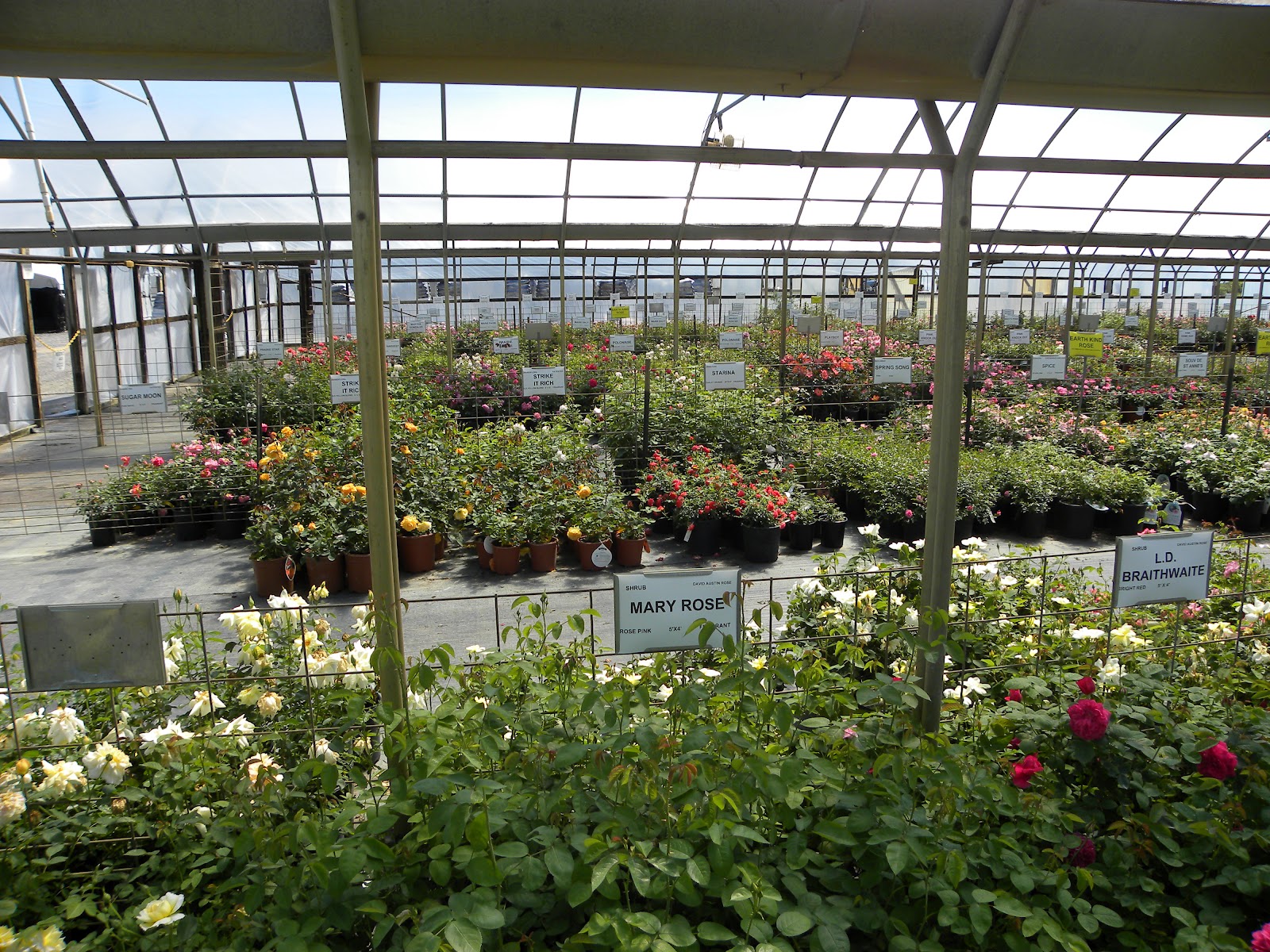
This would be a good time to point out the three reasons I like to get roses from Chamblee's. 1. They grow roses that grow well in my area and they are actively working with the Earth Kind Roses program to provide roses to the public which will be healthy and vigorous plants through out their lives.  2. Chamblee's provides roses grown on their own roots rather than grafted to another rose's rootstock.  I believe this provides better plants for the long run.  3. They provide nice sized healthy plants at a very good price.  At $8.95 or $11.95 for one gallon plants, I spent just over $80 and left there with 8 plants.  They do provide 3 gallon plants which are much bigger, but I'm too cheap for that.
I could have easily bought many more, but it was hard enough finding room in the truck for the 8 I did buy.  They have so many varieties I would like to grow, and the plants look so healthy it took a great deal of restraint to stop when I did.  If there is anyway you can manage it, I think you should try to make the drive to Tyler, Texas this spring to visit Chamblee's and to visit the Tyler Rose Garden.  They are must see places for the Rosarian.  For that matter, add visiting the American Rose Society Garden in Louisiana just an hour down the road as well.
The roses I came home with show my unique and varied taste in roses.  The first three are miniatures: Rise N Shine, Green Ice, and Sachet.  I have had Green Ice before, but I think it did not survive the move.  Rise N Shine is a very healthy yellow mini which I have not grow before.  Sachet is a mauve/lavender miniature that has been around since 1985.  The next two are sentimental picks Shreveport, whose orange blended color I enjoy and it will remind us of Clyde since he so enjoyed living in Shreveport. This year I am also adding a hybrid tea, which is something I have not done in a long time. Dolly Parton, is a hybrid tea whose fragrant and very large blossoms are something I have always been drawn to but have never grown before.  With Shreveport and Dolly both sporting orange, I think I will put them on either side of the gate to the backyard and then flanked by the next roses.  These roses are less upright, shrub roses that follow my love of purple/lavender roses and are Purple Rain and Twilight Zone.  The orange and purple together may be too much, but it will be away from most of my other roses.  I also added a David Austin rose I have not grown before Glamis Castle.  I have not had good success with his white roses, but many people say that Glamis Castle is the best of these. I just want to give it another try, so here we go with Glamis Castle.  

With the 22 roses I recently moved here, that puts us at 30 roses that will be brand new to our yard.  This 30 does not include a couple I have ordered and will tell you about later, or the rose I was given by a beautiful young woman in our church or the seeding I found growing in my mother's garden.  As I started moving the roses I noticed what was clearly a young rose sprouting up underneath the red miniature moss rose Unconditional Love. I will tell you much more about these as the season comes on, but for now, take a visit to Chamblee's Rose Nursery either on-line or in person.  You will be glad you did. 

Friday, January 23, 2015

Moving Day Finally Came

Martin Luther King Jr. weekend gave me the perfect weather and amount of time to return to rose gardening.  It is hard to believe, but it was a year and a half ago when Angie and I moved to Chickasha.  At that time we had moved roughly 30 roses to my mother's for a temporary stay while we made the move.  Now we have finally moved the roses that have survived to our new home.  It seems that seven of the roses died in the process leaving us with 24 new roses, which I planted this past weekend.  I didn't mark the roses so many remain unidentified, but I was surprised how many I could recognize from their bare canes or remember the location they were planted in.  The rest will surprise us this spring and I will try to move them to more appropriate spaces once they show their true colors.
Heritage recently relocated to its new home.  I know its only January but I am really looking forward to spring. 

The delay, which allowed my mother to enjoy the roses a little longer than expected, was brought about by the large amount of work needing to be done at the new church, our associate pastor leaving six months after we arrived, and showing our Italian Greyhounds this fall.  There is a nice picture of Skidi's Pretty Boy Floyd and me at the bottom of this post.  Now that they are here, I am glad to note how healthy and strong most of them look.  It looks like I just planted the best shipment of bare root roses I have ever seen.  That all of these first arrived as very small rooted cuttings makes their arrival as huge bare root roses somewhat ironic. 

            Moved & Identified

Abraham Darby
Golden Celebration
Heritage
Jude The Obscure
St. Swithun  
Tradescant
William Shakespeare 2000
Oklahoma
Red Cascade
Unconditional Love
DayDream
Distant Drums
Folksinger
Prairie Harvest

            10 of 17 Moved but Not Identified the remainder didn't make it

Fair Bianca
Carlin’s Rhythm
Pam's Choice
Jeri Jennings
Penelope
Maggie
Moore’s Striped Rugosa
Lavender Crystal
Popcorn
Tattooed Lady
Winsome  
Twister    
Mel Hulse
Treasure Trail 
Belinda’s Dream  
Rhapsody in Blue
Siren’s Keep

Sunday, August 11, 2013

Settling In

With the move to the new church, Epworth United Methodist Church, and new home a couple of months under the belt, this past week and a half has given me the first real time to do much work in our new yard.  This also gives me a chance to update my blog which has been neglected this summer.  Yet before I show you the landscape, let me share one of my other hobbies with you, my 62 VW Karmann Ghia.  This picture shows the car beside our new home.  They look like they belong in the Italian country side.
It is hard to believe that when we started working on this car a little less than 10 years ago, it had been sitting in the pasture for years as a chicken coupe.  I just love this picture of the ghia.
Now to the work at hand.  We are a long way from putting in new roses.  That will get started in September.  For now I have been cleaning out some of the overgrowth in the yard.  This Friday we began chipping branches from the dozen 3-6" round trees that had grown up in fence lines and flowerbeds while also trimming up some of the bushes and lower limbs on the trees in front.  Thomas, my happy helper, is feeling triumphant in his work.  The two small trees behind him stayed keeping the total number of trees on the lot at a dozen while still bringing in some needed sunlight. 
After referencing the manual, we were ready to get busy chipping.
A chipper is a great way to get rid unwanted trimmings while also providing good matter for a compost pile.  You should really know that it can be a real workout.
After all was said and done, we ended up with a nice start to the compost pile which will provide a nice soil amendment for the flowerbeds in the spring.  When some lawn clippings and other yard waste is worked in as well, it should really start cooking.  For now it is about 8' x 8' and 2' tall.  Angie was a big help in this project, but she is unseen as she was the photographer. 
Now that the yard is looking better and the beds are shaping up, I can start figuring out what I will move and where roses will go.  This summer has been so very busy with the new church.  It has been great but I have missed the physical exertion and pleasure of being in the yard.  While exhausting, it is also refreshing.  I don't know who said it, but I have always been fond of the saying, "When the body is most in motion the mind is most at ease."  That being said, I think I'm ready for a nap on this Sunday afternoon with my body, mind and spirit each feeling at ease.

Thursday, May 9, 2013

Mature Bushes

While I am as much a fan of new roses as the next person, I love to see big, mature, old rose bushes.  Mature roses offer so much that their younger siblings can not.  A young bush can not overwhelm you with thousands of blooms.  A young rose is more susceptible to draught lacking the developed root system of a mature bush.  And while we all love to see new basel breaks sending out strong new shoots of growth, it is the strong woody growth that can support the explosive displays of spring.
This old growth wood often looks very different from the green wood of new growth.  As this older wood continues to build rings of growth just like a tree, its outer skin breaks with the expansion and develops bark while looses its thorns and looks like what we often think of as a tree.  You can see this on my mother's mature plant of Buff Beauty.  Without support Buff Beauty becomes a broad spreading plant but with support it easily grows as a climber.  Pictured here is Buff Beauty after the arch it had grown on for over a decade had fallen and after it had lost almost half its growth from the collapse.
The canopy created by this mature bush of the Hybrid Musk, Buff Beauty is breathtaking to sit under when in full bloom.  If it were not for the strong, older, mature growth underneath it could never reach these heights.  New breaks of growth will develop at the top of such mature wood while the lower portions will seem rather bare even loosing its thorns.  Sitting here, under the filtered light and overwhelmed by its heavy fragrance one can become lost to the world.
This final shot serves as the backdrop for my blog.  I love its heavy wood and light flowers.  I thing we have done a disservice to would be rose growers when they have been told for years to trim their roses back in the spring.  Too often they trim them back and miss the real beauty these bushes can give.  One of the first pieces of advice I often give an aspiring rose grower is to stop trimming their roses and let them grow out to their nature size.  Too often we have tried to work against the nature of these beautiful roses to their detriment and our own. 

Tuesday, March 26, 2013

Cut Back and Dig Up!

When I first started ordering roses, I would order them as bare-root plants that came in the early spring as plants that were cut back to about nine inches tall and a healthy root system on the other end.  As I prepared my roses to make this migrant journey, I thought of those boxes of roses I would eagerly open each spring imagining their coming blooms.  Now the roses I order come as much smaller plants in small containers of soil, but the roses I am preparing to move are going to follow the bare root images in my mind from years gone by.  I worked through the garden selecting the roses that will make the move and those that will stay to make a manageable garden for the new resident.

As I decided that a rose would move, I cut it back the week before it was to be dug up hoping this would give it some time to adjust to the idea.  I picked my day of spring break, got up early and I dug up thirty roses.  When I trimmed them, I had carefully gone through each plant deciding just how far back it was to be cut off.  I was trimming them back farther than I really like, but as I was digging them up I realized that I had not cut them back nearly enough to make their transportation easy.  The first roses I dug up were probably two feet tall above the ground.  Those first roses with their generous size were packed and loaded, but quickly I began making a second cut to about a foot tall as they were loaded up.
Notice the sucker being sent out from the roots.  This will expand the size of the plant when it emerges.
As I was planting them in my mother's garden, I saw just how clearly from one end of the row to the other they decreased in size.  For convenience I dug one long trench and placed them side by side far too close for my comfort and certainly their's if they were to stay long.  After years of hearing me say, "I would rather plant a two dollar bush in a ten dollar hole than a ten dollar bush in a two dollar hole," my mother mockingly asked me if that was a ten dollar hole as she brought me a glass of water to quench my thirst.  Knowing that I was borrowing her garden space, I politely smiled.  Certainly the soil qualified but it was not my best effort.

          The list of the roses that made the move:
Distant Drums
Prairie Star
Folksinger
Heritage
Jude The Obscure
St. Swithun
Tradescant
William Shakespeare 2000
Fair Bianca
Golden Celebration
Maggie
Jeri Jennings

Penelope
Oklahoma
Winsome
Lavender Crystal
Tattooed Lady
Popcorn
Twister
Red Cascade
Treasure Trail
Unconditional Love
Mel Hulse
Belinda's Dream
Siren's Keep
Rhapsody In Blue
Pam's Choice
DayDream 
Carlin's Rhythm
Moore's Striped Rugosa

          Small plants potted up and ready to move on day one.
Autumn Splendor
Abraham Darby
Linda Campbell
Vineyard Song
Lavender Lassie 

        To be Cut Back and Moved after the Spring Bloom
Climbing Rainbow's End
Red Moss Rambler

Only a rose nut would even consider this much work.

Thursday, March 21, 2013

Visiting Home

In my last post I shared that in June we will be moving to serve a new church and community.  In the United Methodist Church, pastors (or parsons) live in parsonages provided by the church.  So last week we visited the new church and what will be our new home.  I want to thank fellow blogger and current resident, Elizabeth Johnson of Wind and Honey Creations for sending us this lovely picture of the home before we arrived.  Elizabeth and her husband Rev. Rockford Johnson, whom I will be following at Epworth United Methodist Church in Chickasha Oklahoma, graciously welcomed us in and gave us a tour of this 1919 construction parsonage.  I'm sure that over the coming year you will get to know much more about  this house.
The church has maintained the parsonage very well.  While I certainly wanted to learn about the home, my mind was also thinking about potential rose gardens.  Arriving early I drove by and shot this picture which shows the house, garage and so much space for roses.  Yet before I can do too much dreaming, there are many administrative tasks to wrap up, sermons to prepare, a home and office to pack up, and hardest of all many goodbyes to say.  Now is the time of living in between.


Saturday, March 9, 2013

Moving Day

Having served as a United Methodist Minister for the past 22 years, I am more than aware of one reality that Methodist are often known for; our pastors move.  United Methodists follow an "apostolic", meaning "sent", form of pastoral assignment.  That is, we are sent to serve a congregation by a "General Superintendent" of the church otherwise known as the Bishop.  Regions of the country are divided into conferences of which we are members, and we are assigned or appointed within the conference - Oklahoma in my case.  For the past four years I have served the United Methodist Churches in Prague and Arlington.  I have enjoyed our time together very much.  It hasn't always been easy but it has been four very good years and we have seen many accomplishments during this time.  So as you have probably already figured out from my lead in, I am being appointed to serve a new church this year.  This will take place in early June, which (for relevance to this blog) is a prime time in rose season.

Previous times when I have moved, I have left rose gardens behind and I will be leaving many roses this year.  However, I am going to try to take several roses with me this year.  My plan is to trim and transfer a large number of my roses to our new home with a couple of month stop in my mother's garden.  I started with my "Rev Recommends" but could not limit myself to only those roses.  I hope in the next week to finish my list of roses to transfer and to trim them in preparation for the first of two moves, one in the spring and one in the summer.  I am always happy to leave rose bushes for new residents, but I don't want my hobby to become their burden, or for them to whack them down and mow them over.

I have some duplications, which will allow for taking one and leaving one, and I have some year old plants which will transplant easily.  I also have some that will not be hard to leave behind although that number is small.  Here are the ones I am certain I will take with me.  Take a look at the list of Roses I Grow and let me know which one you would take, leave, or come back and get a cutting to start a new bush next year.  I know it seems crazy to think about moving this many roses, but it seems harder to think about not growing them or replacing them with new orders.

          Making the Move - 29 So Far - Or Not Quite Half
Distant Drums
Prairie Star
Folksinger
Abraham Darby
Heritage
Jude The Obscure
St. Swithun
Tradescant
William Shakespeare 2000
Jeri Jennings
Penelope
Oklahoma
Winsome
Autumn Splendor
Lavender Crystal
Tattooed Lady
Twister
Red Cascade
Climbing Rainbow's End
Treasure Trail
Unconditional Love
Belinda's Dream
Braveheart
Siren's Keep
Pam's Choice
DayDream
Carlin's Rhythm
Linda Campbell
Moore's Striped Rugosa

Friday, November 2, 2012

Rose Hip Tea

Over the years, I've come to appreciate so much more about the rose than just the beauty of its flowers.  In these days of late fall the rose hips add some nice color to the last few roses that are still in bloom.  One of the best hip producers I have is Gertrude Jekyll whose rose hips you see pictured here.
Last year I gathered many rose hips and tried planting their seeds.  Unfortunately I was not able to get any to grow.  This year I decided to give it another try and I have been collecting seeds again.  One night as I was cutting the hips open to collect the seeds, I tasted the sweetness of the hips on my fingers and knife.  Having known people who used to collect hips to make rose hip tea, Angie and I decided to give it a try.
A quick search of the Internet and we found a simple recipe to try.  Chop up 2 teaspoons of rose hips for each cup of tea you want, bring as many cups of water to a boil, pour the water over the hips and let steep for 15 minutes.  Finally pour the tea through a strainer and serve.  We also added a small amount of sugar during the steeping process.  Rose hips are said to have far more Vitamin C than Oranges or other citrus and are full of anti-oxidants.
Not knowing how fine to chop the hips we cut them to a medium size.  Not minced or too fine but enough that it still brought out the flavor.  I think it was about right but we were pretty much going blind.  This size was easily strained.
 The color of the tea was light and a bit cloudy.  Angie's father was visiting and the three of us approached this new experience with varying degrees of comfort.  I was most eager, Angie has been pulled into trying so many new things with me that by now she was ready, and Clyde was just going along.  So you want to know what it tastes like, right?  Well, you should give it a try.  My father in law thought it tasted like apples.  I thought there was also a flavor like pumpkin.  Angie was surprised that it was more flavorful than she expected.  Everyone finished their tea and in another half hour we were all ready to go to bed.  It was just late I don't think the tea had anything to do with that.
 If you decided to make some rose hip tea, only use hips from roses that have not had chemicals applied to them.  You just don't know what the chemicals will do to you.  One last thing, to any of my readers who have wondered where I have been, thanks for coming back.  The summer was so hot this year that I didn't have a lot of great pictures to offer and not enough energy to work hard figuring out something to write about.

Wednesday, August 29, 2012

For Something Different

It has been so hot this summer that I haven't had many roses in bloom recently.  With that being the case I thought I might share something totally different about myself.  Below is a commercial I was in.  It was filmed at the church I was serving at the time.  It starts with a test screen.  If you hang on the video will start.  Enjoy!

Tuesday, July 31, 2012

Distant Drums Brings Back Memories

For years I have grown a wide variety of modern roses.  While this is true, I have never grown any of Dr. Griffith Buck's roses.  Knowing that ProfessorRoush has had good success with them and feeling like I would like to try something new, this spring I added four roses bred by Dr. Griffith Buck.  As a professor at Iowa State, Dr. Buck developed shrub roses with the aim of increasing disease resistance and winter hardiness through the research foundation of the university.  Of the four Buck roses I added this year, Distant Drums is a rose that has been on my interest list for many years. 
Distant Drums is an often discussed roses because of the unique color of its roses.  Maybe I should have said colors because I have seen it referred to as mauve, tan, pink, orange, and yellowish.  Maybe "A Symphony of Color," is the best description I have seen.  I was hoping for more of the mauve coloring but with the summer sun, I have yet to see it.  Instead, the colors have been a rich mixture of pink and buff on flowers of twenty petals.  I think that the shorter days of fall should give me a few flowers with mauve in them.
While not as tall as the other Buck Roses, Distant Drums is still growing nicely. It is roughly two feet tall and is very free flowering.  With the English Rose, The Yeoman as a parent, Distant Drums inherits the unique fragrance of myrrh.  Its flowers are holding up better to the 100+ degree heat than I had expected.  For some reason, I worried about how it would do in the heat, but so far it is just fine.  Below you get an idea of how its softer color can turn out.  So far I am very happy with Distant Drums and I cannot speak its name without the fond memories of hearing the drums of the Pow Wows late into the evenings when we used to live in Pawnee.  Even now I find myself smiling as I remember tucking Anna and Thomas into bed as the drums carried through the summer air and lulled us all to sleep.

Tuesday, July 24, 2012

Red Moss Rambler: The Giant in the Neighborhood

Occasionally, when ordering roses, you will be sent something you didn't order.  Sometimes a rose is mislabeled but that is not what happened to me.  This spring when my order from Rogue Valley Roses arrived it had an extra rose in the package.  I was surprised to find a very small plant labeled Red Moss Rambler.  I had ordered another red moss rose, Mel Hulse, and I guess in the process of ordering it they heard me ordering both.  Rogue Valley Roses were very understanding and refunded the cost of the rose and after discussing how I would ship it back to them, Janet Inada asked me if, "I might not keep and grow it instead?"  I hadn't planned on it but I said, "Sure, its a rose.  I'll grow it."  Red Moss Rambler is now the one and only non repeat blooming rose I grow.  As you can see from the photo below Red Moss Rambler is certainly liking its new home. 
The plant you see above arrived here just four months ago (the beginning of April) as the small rooted band you see below.  It is hard to believe that such a quick transformation is possible but here it is.  Without having to put energy in to growing flowers Red Moss Rambler has put its energy into sending out new canes of up to eight feet in length.  I have seen this rose listed as growing twenty feet tall.  It does not have a wall or tree that tall so I will be interested in seeing how it spreads out in coming years. 
Its home is in a new bed filled primarily with English and Buck Roses.  It may end up being a little out of place but what place do you give such a rose?  It should have plenty of space to spread out and it is clear that Red Moss Rambler is going to out growing its neighbors by a long shot. 
Red Moss Rambler is another of Ralph Moore's creative roses which he released in 1990.  It also shares the same seed parent as his ground cover rose Red Cascade.  It shares the same small red flowers but with a light mossing on the outside of the bud and an obviously more upright and vigorous growth habit.  Before it began this amazing growth, I was treated to a half dozen blooms.  While we are far from the end of our growing season, I can hardly wait to see it blooming next year.
In our backyard I put tomato cages around all new roses to protect them from accidentally getting knocked down or broken by our dogs.  Yet as I looked at how Red Moss Rambler is growing and was being held a bit uptight by the cage, I decided that today was the day to take it off and let it spread out more naturally.  It looks a lot more comfortable now.  I can only imagine what it will look like after four years instead of four months.

Friday, July 20, 2012

Red Cascade: A Rose of Another Shape

There were several roses I took cuttings from last Fall and put them in my cutting bed.  Having a growing success at getting cuttings to start, I took four small cuttings from Red Cascade hoping to get one or two to start new plants.  Red Cascade has helped me to increase my batting average because all four cuttings took.  On Mother's Day I took the two strongest ones to my mother's house and planted them in a planter around her gas light in front of her house.  Later I potted up the next one while the smallest of them I moved to this slightly raised bed in our back yard. 
Red Cascade is a miniature rose bred by Ralph Moore but miniature only applies to the size of its petals and leaves.  The bush actually grows to be quite big, or should I say quite wide.  It is described as growing a foot tall and ten feet wide - the rose equivalent of an inch deep and a mile wide.  This spreading nature makes it very useful as a ground cover, something most people would never think of in a rose.  As such it stands out as another remarkable example of Ralph Moore's creativity.  It was through the use of Rosa Wichurana on both sides of the family tree that this trait was brought to bear in Red Cascade.  As its name indicates, Red Cascade is also another great rose to use in a raised bed where its growth can be allowed to spill over and down the side of the bed.  While mine is still only a few months old, it has already reached the edge on one side of its new home.
The small flowers are also nice, being somewhat old fashion in shape and opening flat. I have been impressed with its vigor, both in growing new roots and its ability to spread quickly. I suspect that both are related, and I wonder if in a couple of years I will wish that I had given it more space than I did.  We will worry about that later.  As for now I am just enjoying its spreading habit. 

Saturday, June 30, 2012

Prague Rose Garden Club Update

Despite the intense heat of the past week, the roses in the Prague Rose Garden have been growing quite nicely.  The seated arch has been the focal point of the garden but there were no roses growing up the arch.  Last spring I planted a Lavender Lassie on each side and I think by summer's end they will grow to meet at the top of the arch.  They are flanked on either side by some form of Knock Out
The bed below is where I started my work in the Prague Rose Garden.  This bed sat idle with grass over two feet tall.  I thought, "With no roses and the city crew unable to get their John Deer equipment into it, surely no one will be offended if I clean it out and put a few roses in."  Being closest to the road the three tall minis in back and the row of The Fairy in front add some nice color to passers by.  Eventually the two English Roses I planted last fall in the center (Heritage and St. Swithun) will add some heighth and fill out the display.  Hopefully it might even attract a few people to stop and, well, smell the roses. 
Last year I turned some attention to the other end of the garden where a lone purple hybrid tea that is very winter tender was making a home.  I had less of a plan on this one and lots of cuttings and suckers that had taken, so I began to fill it in.  Up front you have two plants of Popcorn on either side of the water hydrant.  On each of the corners are yellow roses: in the back are two of the English Rose Graham Thomas and in front are the miniflora Autumn Splendor and an unknown yellow florabunda.  I took the cutting sometime ago but didn't write down what it was from and forgot.  I'll figure it out in time to label it when I get around to putting markers of each of them.  When I do this, I was thinking that I would put the variety, class and year.  What do you think?  Does it need more information or does more mean people read less?  Flanking the hybrid tea are Reine des Violettes and Precious Dream and behind is DayDream.
I took a step back so you can get a sense of the size of the garden.  It's not so large as to make the upkeep too difficult yet large enough to make a statement.  I think its elongated design, running diagonally across the corner of the park, works nicely for the maximum display.
I would like to mention that the Prague Rose Garden wouldn't be here if it weren't for two very special people - Milo & Norma Foreman.  Norma was the first president of the Prague Rose Garden Club.  She tells me that it was really Milo who put the garden in and took care of the roses.  Milo is now in his 90's and I get the priviledge of spending Sunday mornings with them, as Norma is the pianist at the Prague United Methodist Church which I also have the joy of serving.  One last thing, Milo did a fabulous job making sure that the garden had a very rich and friable soil.  The ground is incredibly easy to work.

Monday, May 14, 2012

Why Can't I Grow Roses?

       Every week someone will tell me, "I just can't grow roses", or they will ask me, "Why can't I grow roses, Rev?"  Almost always the answer comes down to one or more of the following issues.  When you follow these simple rules, growing roses is easy.
Select the Right Roses
       For years people have been trying to grow the long stem hybrid tea roses they get at the florist, but these are the very worst type of rose for the casual gardener to grow.  The hybrid tea became so popular that some people can hardly recognize an old fashion type of rose as a rose.  In response to the trouble they have had with hybrid teas, they have either given up on growing roses, or they have chosen the ever popular Knock Out series of roses.  Knock Outs are almost bullet proof in terms of disease and toughness, but they leave much to be desired in my mind.  First, they are not pretty and, second they have no fragrance.  There are just so many better options than, "All or Knock Out."  Knock Out did make the list Texas A&M has produced of disease and drought resistant roses which they call Earth-Kind Roses.  I think this list is a great place to start when looking to be successful growing roses.  I have also designated some roses I grow as Rev Recommends.  These are roses that I have found to be pretty easy to grow and have something special to offer to your garden.  You will find these roses at the nurseries that I have listed below and to the right under Favorite Rose Resources
Grow on the Right Roots
       For roses that will be long lived and winter hardy you need to grow roses grown on their own roots.  This (and the rule above) will rule out almost every rose you can buy at your local nursery.  For ease of production the large rose growers in this country graft all their roses on to the rootstock of another variety.  When planted, the rose on top blooms while the rose on bottom grows the roots for the rose on top.  Then, when a cold winter kills the rose above ground, only the root stock is left, and it produces an undesirable flower.  Roses grown on their own roots are roses that have been taken from a cutting and allowed to grow its own roots.  These plants come smaller than their Frankenstein grafted cousins, but in a few years they will surpass the others in production.  Also, when you order from the companies I have listed you can call them if you are concerned about ordering online and they will usually get you your roses in one or two weeks.  That really isn't very long when you should really be out in the garden getting ready for your new rose.
Grow in a Rich Soil
       One of the best pieces of advice I have followed when growing roses came from an old adage, "I would rather plant a two dollar bush in a ten dollar hole, than than a ten dollar bush in a two dollar hole."  Add to that another adage, "If you feed the soil the soil will feed you."  This means when you plant your roses, dig your hole until you think it is far too big and add in compost and other soil amendments to create a rich growing environment.  I often add a cup alfalfa pellets and a cup of dry dog food along with the compost from my compost pile.  Saturday we had a work day at the church and I was helping my wife, Angie, plants several rose at the church.  Once I had dug the first hole someone said, "I thought we were having a work day, not a funeral."  To me, that was the perfect compliment that I had dug a big enough hole.
Selecting the Right Amount of Sun
       Roses need sunlight to thrive.  Most roses need at least six hours of full sun and most will be better with more.  Consider this when selecting the location for your roses.  If you are in an area that regularly gets to 100 degrees, also think about if this is morning light or afternoon light.  In places like Oklahoma (where I live) it is often advantageous to allow for late afternoon shade from the most intense heat of the summer sun. 
An Inch of Water Each Week
       To successfully grow roses you need to make sure they have an inch of water each week.  This is particularly true of the growing season but roses, like all plants, need steady water even during the winter.  Rain is always better than a hose or sprinkler, but if nature does not help out you need to.  A true lady in one of my early churches told me, "A rose is like a lady, she likes a stiff drink, but doesn't like to get her feet wet."  Keep the soil moist but not soggy. 
       Most of this list involves early work before you put your roses in the garden.  If you do the early prep work, you to can grow beautiful roses.  If you take short cuts, don't be surprised if you continue to find it difficult to grow roses.